
Reading Bali history in the landscape
Bali is both an island and an Indonesian province. The province also includes Nusa Penida, Nusa Lembongan and Nusa Ceningan. Keeping these meanings separate helps when looking at administrative history or planning a journey between islands. Denpasar is the provincial capital, while Ubud is an inland cultural centre rather than another name for the capital. Modern boundaries and older cultural landscapes tell different parts of the story.
A useful introduction connects the rice fields with the communities and temples around them. The terraces are places of agricultural work as well as scenery. Active temples belong to a continuing religious life, so a visitor encounters more than preserved architecture. Understanding these connections gives a cultural visit more substance than collecting viewpoints without considering the purpose of the places being visited.
Provincial administration since 1958
Bali became a separate province in 1958, with Singaraja as its capital. Before that, it formed part of the province of Sunda Kecil. This is a milestone in modern administration rather than the beginning of Balinese culture. Reading the date in that context keeps a recent governmental change distinct from the much longer history represented by agricultural institutions, temples and ritual practices.
Denpasar as capital since 1960
The capital moved to Denpasar in 1960. Today's province consists of 8 regencies and the city of Denpasar. Places familiar from an itinerary belong to different administrative areas: Ubud is in Gianyar, Tanah Lot and Jatiluwih in Tabanan, and Besakih and Lempuyang in Karangasem. These names provide geographical context when choosing a cultural route; they are not all neighbouring stops within a single town.
Subak with roots in the 9th century
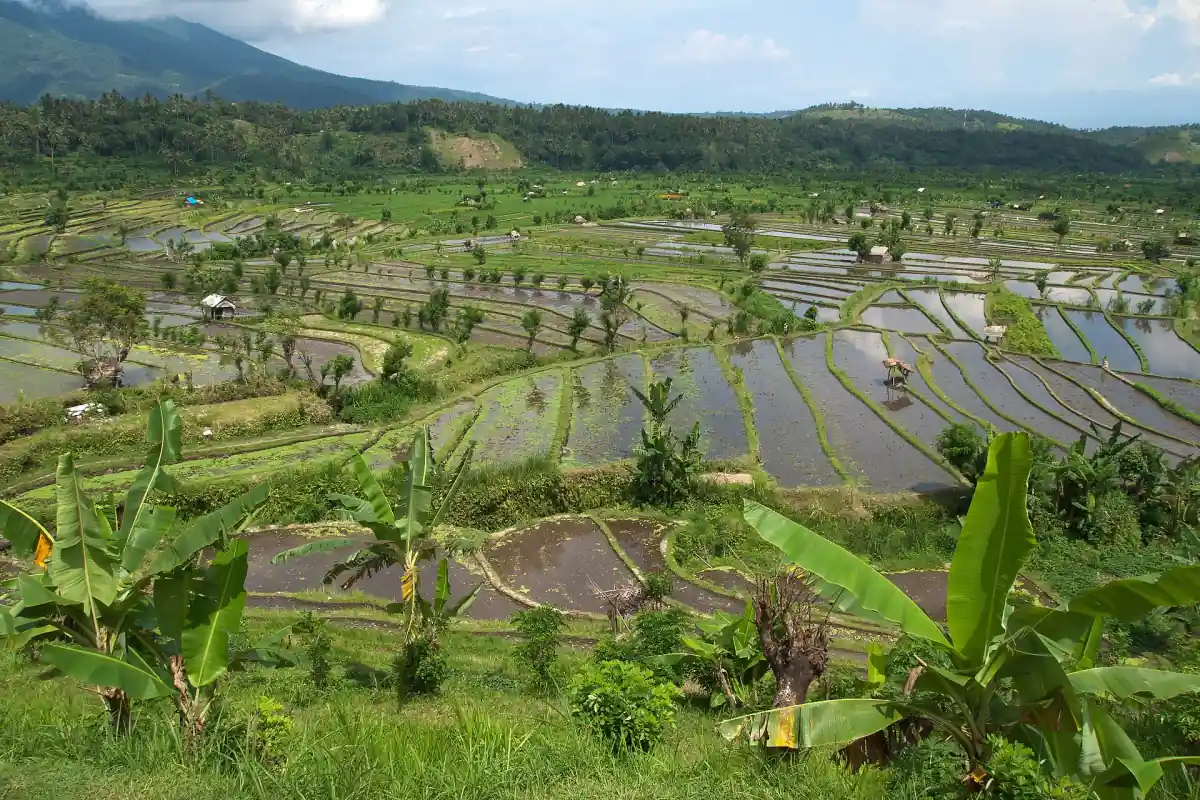
Subak brings irrigation and social organisation together. Its roots reach back to the 9th century, and its water temples connect agricultural water management with religious and community life. Seeing a terrace only as a photographic pattern misses that shared structure. The landscape makes more sense when water, cultivation and the people coordinating them are considered together.
The associated philosophy of Tri Hita Karana concerns relationships with the spiritual world, with other people and with nature. That connection helps explain why temples and rice landscapes belong in the same cultural discussion. It is not simply a label for an attractive view. During a visit, remember that fields remain working land and that a scenic outlook does not establish access to every cultivated plot.
A World Heritage cultural landscape since 2012
The cultural landscape was inscribed on the UNESCO World Heritage List in 2012. The designation covers a defined property with 5 spatial components. It does not make every rice terrace on Bali a World Heritage site. Jatiluwih belongs in this cultural landscape context, while visits around Tegallalang involve separately managed areas with their own visitor arrangements. Use the Ubud guide for the inland visit rather than treating every terrace as the same destination.
Temples, documented history and legend
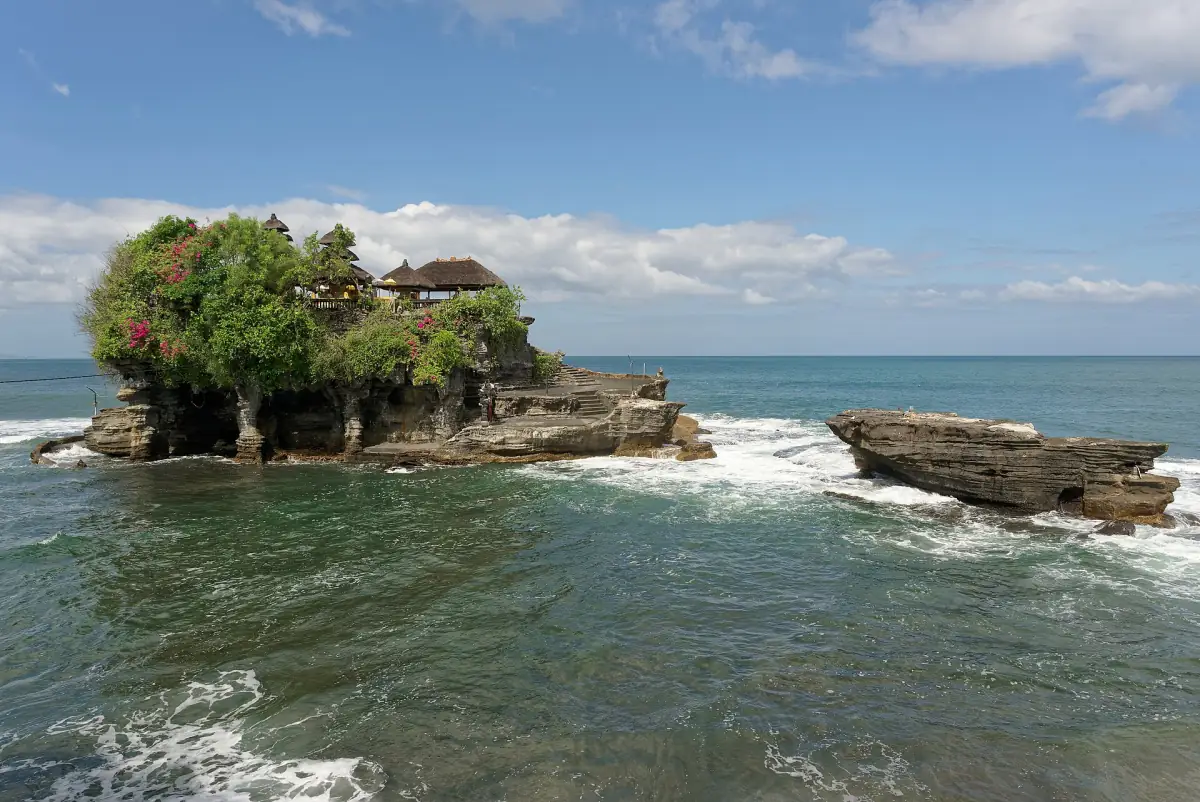
Tanah Lot is associated with Dang Hyang Nirartha, with its origins placed approximately in the 15th to 16th centuries in the state tourism account. The story of a moved rock belongs to legend. Keeping that distinction allows the tradition to be told without turning it into a documented construction event. The coastal setting and the living use of the temple are also part of the visit.
Besakih lies on the slopes of Gunung Agung in Karangasem, with Penataran Agung at the centre of the temple complex. At Lempuyang, the photographed gateway at Penataran Agung and the pilgrimage continuing to higher temples are different visits. A reflected gateway photograph uses a photo effect rather than a natural reflecting pool. Choose the temple visit for its setting and cultural context as well as its imagery.
Living rituals and respectful visits
Ngaben refers to a cremation ceremony, Melasti to purification before Nyepi, and Galungan and Kuningan belong to the living ritual calendar. These practices are not a guaranteed performance for visitors. Nyepi centres on restraint from fire or light, work, travel and entertainment. Approach ceremonies as religious occasions, allowing their purpose and local instructions to guide your behaviour.
Wear appropriate temple clothing, including a sarong and sash where required, and keep shoulders and knees covered. Respect the boundaries of prayer areas: a sightseeing ticket does not grant unrestricted entry into sacred spaces. Tirta Empul's spring-fed purification pools have a ritual purpose rather than functioning as an ordinary leisure pool. The cultural context matters just as much as the appearance of the site.
Visiting Besakih and Lempuyang
The guided cultural outing to Besakih and Lempuyang offers private or shared guiding depending on the selected option. Hotel pickup and admission belong to the relevant package; meals are extra. It is a way to visit the temples, rather than a specialist historical lecture. Read the participation conditions for your chosen option and use the wider history here to give the places context.
Explore Bali temples
A guided temple excursion offers a choice of private or shared guide.
Hand-picked tours, booked through GetYourGuide. Prices are indicative starting prices in US dollars (as of November 2026). Tap a tour for live availability and the current price in your currency.
Visit Besakih and Lempuyang
A guided cultural outing with private or shared arrangements, and pickup and admission depending on the package.
History questions
When did Bali become a separate province?
In 1958, initially with Singaraja as capital. The capital moved to Denpasar in 1960.
Is every rice terrace UNESCO listed?
The World Heritage designation concerns a defined cultural landscape, not every terrace on the island.
What connects Subak and temples?
Subak combines cooperative irrigation and social organisation with water temples and the philosophy of Tri Hita Karana.